Heavy-duty forklift accessories are specialised attachments and parts that extend a forklift’s capabilities, enabling safer, faster and more reliable material handling across warehouses and construction sites. They work by adapting a standard forklift into task-specific equipment, adding reach, securing irregular loads, improving traction and simplifying dock transfers, to reduce handling time and lower incident risk. This article explains the most effective heavy-duty forklift attachments, tyres and support accessories, and shows how the right combinations cut downtime and operating costs while boosting throughput. Readers will learn which attachments suit particular loads, how tyre and tyne choices affect stability and maintenance, site-ready safety attachments for construction, and how container ramps and grapples streamline loading operations. Practical checklists, comparison tables and supplier integration notes are included to help procurement teams and site managers specify fit-for-purpose equipment with confidence.
What Are the Key Heavy-Duty Forklift Attachments to Enhance Material Handling?
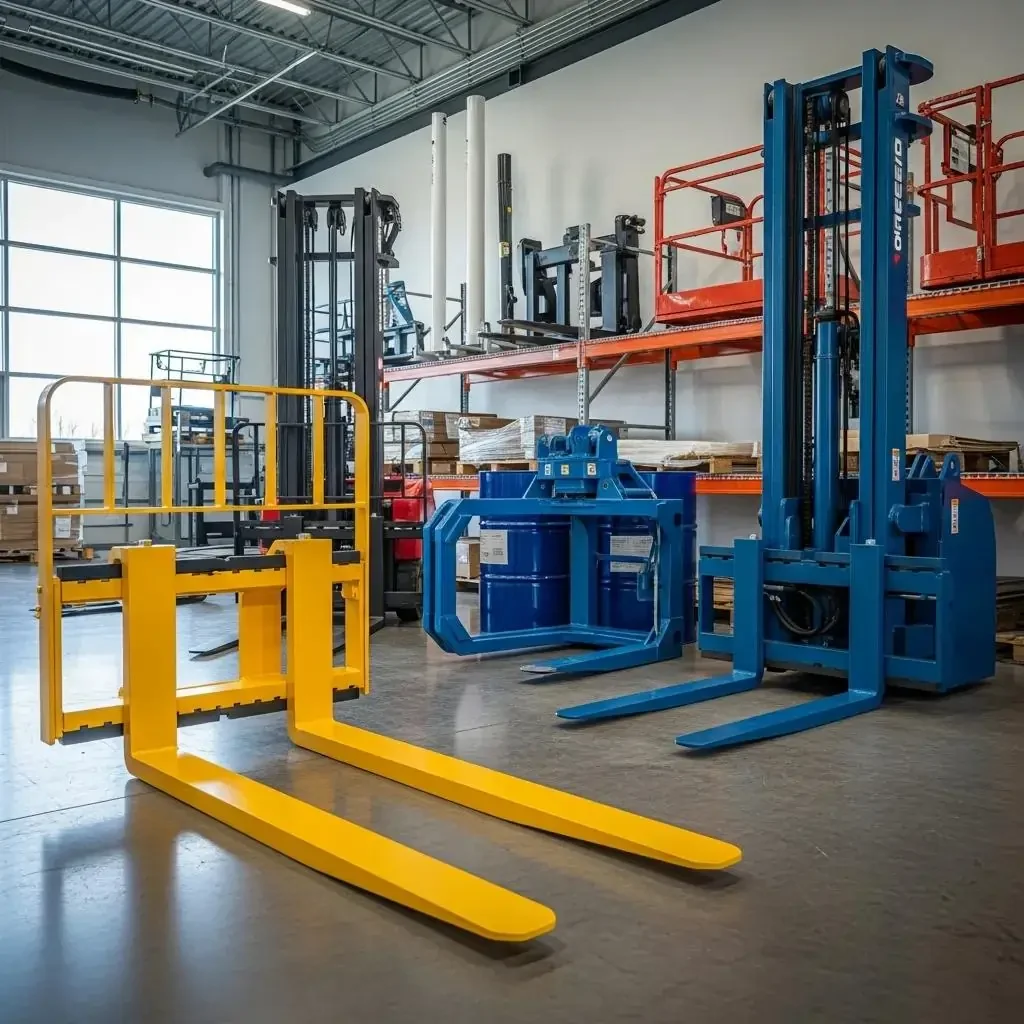
Heavy-duty forklift attachments are purpose-built tools that change how a forklift interacts with loads, improving efficiency by reducing manual handling and enabling single-pass moves where multiple trips were previously required. Attachments like extensions, drum handlers, spreader beams and jibs modify reach, grip and load geometry so operators can transport awkward or heavy items safely and with fewer repositioning steps. Choosing the correct attachment depends on load type, forklift class and duty cycle, with compatibility checks and locking mechanisms critical to preserving safe working loads. The following comparison lists common attachments, their primary benefits and typical use-cases to make selection straightforward for procurement and operations planning.
Top heavy-duty attachments and their one-line benefits:
-
Forklift Extensions: Increase reach to handle long or bulky loads without compromising operator visibility.
-
Forklift Drum Handlers: Secure drums to eliminate manual handling and prevent spills during transport.
-
Spreader Beams and Jibs: Distribute load forces for lifting oversized items and enable slinging of pallet-less cargo.
-
Rotators and Clamps: Allow controlled rotation and secure gripping for tipping, dumping or fragile materials.
These attachments collectively reduce handling steps, which shortens cycle times and lowers labour exposure to manual lifting risks. Understanding attachment compatibility leads naturally to examining how specific extension types alter load centre and safe working load.
How Do Forklift Extensions Improve Load Capacity and Reach?
Forklift extensions are sleeves or bolted-on arms that lengthen the existing fork profile to accommodate longer or wider loads, and they work by shifting the load-bearing contact point further from the carriage. Slip-on extensions provide quick on/off versatility for intermittent long-load work, while bolt-on and custom extensions offer higher rigidity and more predictable load charts for continuous heavy-duty use. Operators must account for how extensions change the load centre and reduce safe working load; this is essential for maintaining stability and avoiding overloaded conditions. Regular inspection of locking pins, wear on contact faces and correct marking of adjusted load capacities ensures extensions deliver increased reach without compromising safety or forklift lifespan.
The critical importance of understanding load center and its impact on forklift stability is further emphasised by studies on the stresses involved in lifting operations.
Forklift Stability & Load Center for Safe Material Handling
This study discusses how to design a system to establish the stability of a forklift fork working with different weights using designing and simulation software. The stresses which appear in the lifting installation of a fork-lift truck at loading-unloading operations are investigated for given input data like load carrying capacity of the fork, the effects of various loads on different positions of the fork regarding stresses and then compare calculated Stresses with allowable material stresses (yield stress/F.O.S). This paper focuses on the significance of Load Centre when subjected to loading at different positions.
What Benefits Do Industrial Forklift Drum Handlers Provide?
Forklift drum handlers clamp, cradle or engage drum heads so operators can lift, tilt and transport drums without manual handling, and they prevent costly spills and repetitive strain injuries. Mechanical and hydraulic grip designs secure 200L and other common drum sizes with rated capacities and often include rotation or semi-rotation features to aid decanting. Using a drum handler reduces transfer time, improves containment for hazardous liquids and minimises the need for additional personnel during drum moves. A product-features checklist, secure clamp, capacity rating, rotation control and easy-fit attachment, helps teams choose the correct drum handler for chemicals, oils or food-grade containers and supports safer, more efficient drum logistics.
| Attachment | Typical Size / Capacity | Primary Use-Case |
|---|---|---|
| Fork extensions | Varies by forklift and extension length | Long timber, piping, and sheet materials |
| Drum handler | Designed for standard industrial drums | 200L chemical and oil drums |
| Spreader beam | Depends on beam length and load rating | Oversized machinery or bundled loads |
This table clarifies common attachment selection by matching capabilities to real-world tasks and highlights why secure fittings and rated capacities are essential before deployment.
For on-site sourcing of these heavy-duty attachments, Mandarin Imports Exports supplies a range of extensions, tynes and drum handling attachments suitable for warehouse and construction applications, and can advise on compatibility and product specifications to match specific forklift classes.
After choosing an attachment, the next critical decision is tyre and tyne selection, which directly influences the stability and uptime of your material handling fleet.
How Do Heavy-Duty Forklift Tyres and Tynes Contribute to Operational Efficiency?
Tyre and tyne selection determines a forklift’s traction, shock absorption and load-bearing behaviour, and choosing the right combination directly reduces downtime while improving operator confidence and load stability. Solid, pneumatic and semi-pneumatic tyres each have distinct performance profiles: solid tyres resist punctures and deliver longevity in debris-prone yards, pneumatic tyres offer better ride comfort on uneven terrain, and semi-pneumatic tyres strike a compromise between resilience and cushioning. Forklift tynes, manufactured from high-tensile steels, manage load transfer to pallets and reduce product damage when specified at correct lengths and capacities. Prioritising correct tyre compound and tyne specification lowers total cost of ownership by reducing emergency replacements, protecting drivetrains from shock loads and improving consistent cycle times.
Key tyre and tyne benefits for efficiency:
-
Reduced Downtime: Durable tyres lower puncture-related stoppages and maintenance windows.
-
Improved Stability: Correct tyre/tyne pairing maintains proper load centre, reducing tip risk.
-
Terrain Performance: Selection matches indoor smooth floors or outdoor rough yards to maintain cycle speed.
Below is a concise comparison of tyre and tyne options to assist purchasing and maintenance planning.
| Component | Attribute | Operational Impact |
|---|---|---|
| Solid Tyre | Puncture-proof / long life | Minimal downtime on debris-heavy sites |
| Pneumatic Tyre | Cushioning / traction | Better handling on uneven outdoor terrain |
| Semi-pneumatic Tyre | Resilient / lower cost | Balanced indoor and outdoor performance |
| Forklift Tyne | High-tensile steel / rated length | Protects loads and reduces pallet damage |
This comparison helps teams prioritise tyre compounds and tyne grades according to site conditions and expected duty cycles, which then informs service scheduling and inventory of spare parts.
Mandarin Imports Exports offers a selection of solid industrial tyres and heavy-duty tynes and provides maintenance and after-sales support to keep fleets running; consult their technical team when specifying compounds and tyne ratings to match your application and to schedule preventive servicing that extends component life.
With tyres and tynes optimised, attention turns to construction-specific attachments that improve on-site safety and productivity.
Why Choose Solid Industrial Tyres for Heavy-Duty Forklifts?
Solid industrial tyres are designed to resist punctures and continuous abrasion, making them ideal for heavy-duty forklifts working in yards, scrap yards or debris-prone construction sites where puncture risk is high. Their dense construction increases tyre lifespan, reduces unscheduled tyre changes and transfers less lateral shock into the drivetrain, which lowers long-term maintenance costs. Solid tyres trade some ride comfort for durability, so pairing them with well-maintained suspension and moderating speed over rough ground keeps operator fatigue low. When uptime and predictable operating hours are priorities, solid tyres deliver clear total-cost-of-ownership advantages versus pneumatic alternatives.
What Are the Advantages of Durable Forklift Tynes in Warehouse Settings?
Durable forklift tynes crafted from high-tensile steel maintain structural integrity under repeated heavy loads and prevent deflection that can lead to pallet damage or load instability. Selecting the correct tyne length and capacity ensures loads remain balanced and the forklift’s rated capacity is not exceeded, which protects both product and equipment. Regular inspection intervals focusing on wear, straightness and locking-pin condition prevent gradual degradation from becoming a safety issue. Choosing the right tyne profile and enforcing inspection checklists reduces handling errors and supports consistent throughput during peak loading periods.
Which Forklift Attachments Optimise Safety and Productivity on Construction Sites?
Construction sites demand attachments that manage irregular loads, provide resilience on uneven terrain and protect operators working at height, and the right selection reduces manual labour and accelerates project timelines. Jibs, hooks, reinforced tyres, work platforms and safety cages are core items that enable lifting beams, placing materials without pallets and safely carrying personnel for elevated tasks. Site-specific safety considerations, such as ground conditions, lift radii and materials being handled, dictate attachment choices and rated capacities, with rigging best-practices and proper certification essential to avoid accidents.
Construction-focused attachments and benefits:
-
Jibs and Hooks: Enable lifting of beams and pallet-less loads with controlled rigging.
-
Buckets and Grapples: Move loose materials like aggregate or soil faster than manual shovelling.
-
Work Platforms/Safety Cages: Provide certified elevated access with harness points and gates.
These attachments reduce manual handling and cycle time while supporting safer task execution where scaffolding is impractical, paving the way to discuss jibs and safe rigging practices in more detail.
How Do Forklift Jibs and Hooks Facilitate Safe Lifting of Awkward Loads?
Forklift jibs and hook assemblies convert a forklift into a short-radius crane, allowing slinging and precise placement of beams, trusses or pallet-less loads while keeping the operator in the cab for visibility and control. Different jib lengths and rated load charts define safe lift radii; operators must consult load charts and reduce rated capacity as reach increases to maintain stability. Rigging best-practices include using rated slings, checking attachment shackles and ensuring lift plans minimise load swing and centre-of-gravity shifts. When jibs are properly matched to the forklift class and secured with manufacturer-approved pins, they deliver significant productivity gains for placing construction materials quickly and safely.
What Role Do Work Platforms and Safety Cages Play in Operator Protection?
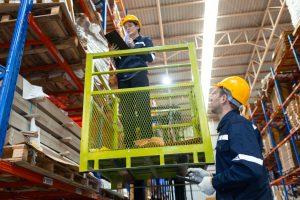
Work platforms and safety cages are engineered attachments that convert a forklift into an elevated work access device, with required features such as gated access, fall-arrest anchor points and secure mounting to the carriage to prevent accidental decoupling. Regulatory compliance and inspection protocols are critical: platforms must be used according to rated capacities and inspected for gate function, locking pins and attachment integrity before each use. Operational best-practices include using harnesses connected to certified anchor points, briefing operators on platform entry/exit and never allowing forklifts to lift personnel on uneven or unstable surfaces. Properly implemented, platforms reduce the need for ladders or scaffolding and enable rapid, safer access for short-duration elevated tasks.
How Do Container Ramps and Other Accessories Streamline Warehouse Loading Processes?
Container ramps and specialised attachments like buckets and grapples alter the ergonomics of loading and unloading, enabling forklifts to transfer goods directly into containers or trailers without repeated manual staging.
Ramps provide a portable transition between ground level and container floor, cutting load-in times and reducing double-handling.
Key ramp features, load capacity, non-slip surfaces, anchoring points and portability, determine how quickly and safely forklifts can operate during peak loading windows.
Complementary attachments such as buckets and grapples expand the range of materials moved, allowing a single forklift to handle palletised goods and loose bulk materials efficiently. The pragmatic selection of ramps and multi-role attachments simplifies logistics and shortens dock turnaround.
Essential ramp and operation features to prioritise:
-
Load Capacity: Must exceed the combined weight of forklift plus payload.
-
Surface and Anchoring: Non-slip decking and secure anchoring prevent slippage and misalignment.
-
Portability and Storage: Foldable or wheeled ramps enable rapid deployment and compact storage.
These features together reduce loading time and create safer, more repeatable container operations; the following table summarises typical ramp and accessory specifications to guide procurement decisions.
| Accessory | Key Specification | Typical Benefit |
|---|---|---|
| Container Ramp | Load capacity (kg) / non-slip surface | Faster, safer container loading |
| Forklift Bucket | Volume / reinforced lip | Efficient movement of sand, aggregate |
| Grapple | Clamp force / opening width | Secure handling of irregular waste or timber |
This specification-focused table highlights attributes to check when buying ramps and handling attachments and emphasises anchoring and load ratings as top priorities for safe container operations.
Mandarin Imports Exports lists container ramps and heavy-duty buckets/grapples among their warehouse solutions and can provide quotes and specification guidance to ensure ramp capacities and mounting details match your fleet. With ramps and attachments optimised, teams can standardise loading workflows to improve dock throughput, which leads to broader strategies for maximising warehouse efficiency.
What Features Make Container Ramps Essential for Efficient Loading?
Container ramps bridge vertical gaps and ensure forklifts can reach container floors quickly, improving cycle times by eliminating pallet re-staging and manual transfer steps.
Essential ramp specifications include a load capacity rated above the combined mass of forklift and fully loaded pallet, a non-slip surface to maintain traction in wet conditions and secure anchoring to the container to prevent movement during operations.
Portability and storage features allow ramps to be shifted between docks or stored compactly when not in use, and integrated handrails or side curbs add another layer of safety during alignment.
Choosing a ramp with clear load markings and maintenance access for wear checks reduces risk and keeps operations predictable.
How Do Forklift Buckets and Grapples Enhance Material Movement?
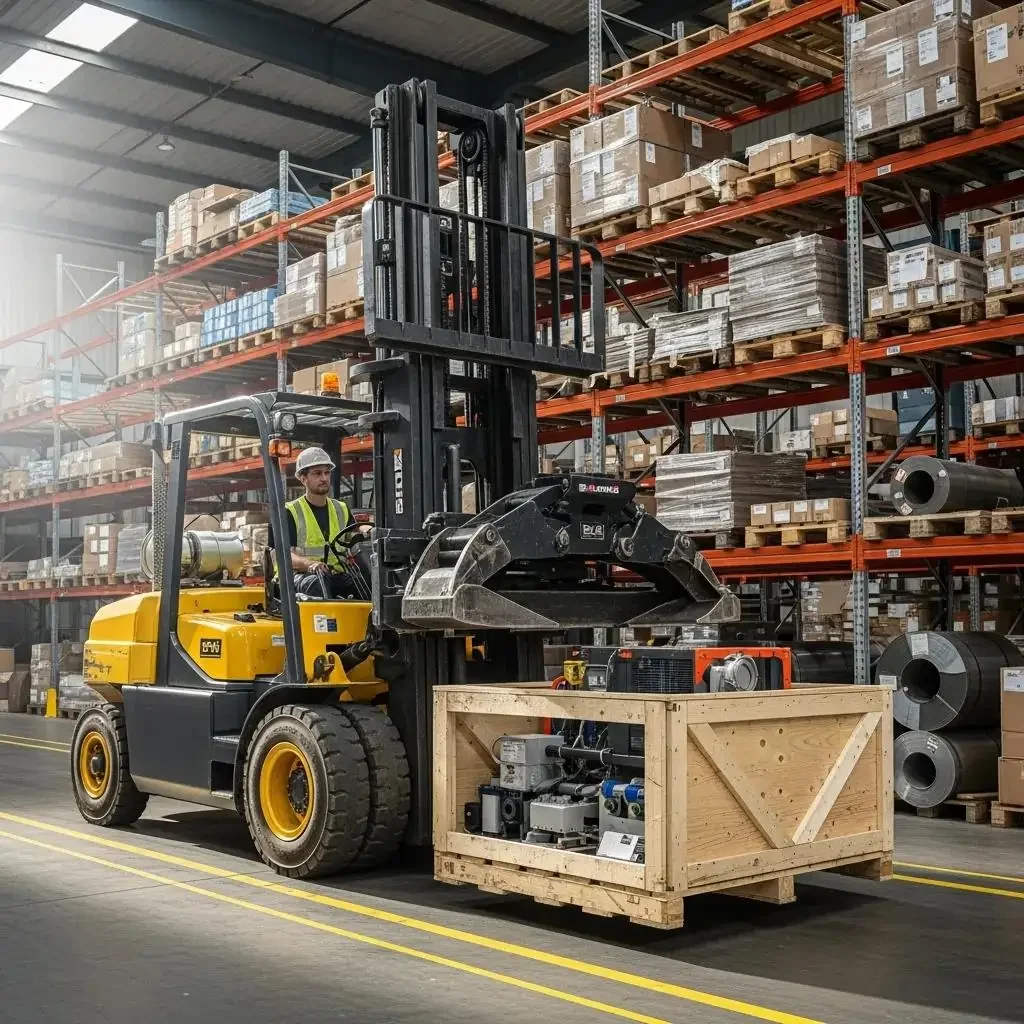
Buckets and grapples convert a forklift into a bulk-material handler and a secure clamp for irregular items, enabling movement of sand, aggregate, waste or timber without transferring loads to specialised machines.
Bucket capacity and lip design determine fill efficiency and emptying speed, while grapple clamp force and jaw geometry dictate the range of materials that can be secured safely.
Industries such as recycling, landscaping and construction gain cycle-time improvements when a single forklift handles both palletised and loose loads, cutting equipment handovers.
Regular maintenance, securing hinge pins, checking hydraulic seals and ensuring corrosion protection, preserves attachment performance and extends service life.
What Strategies Use Heavy-Duty Forklift Accessories to Maximise Warehouse Efficiency?
Maximising warehouse efficiency with heavy-duty accessories requires a systems approach that matches attachments to workflows, enforces preventive maintenance and trains operators on safe attachment use to reduce downtime and handling errors.
Understanding the true costs and utilisation of forklift fleets is crucial for effective warehouse management, as highlighted by research into operational expenses and efficiency.
Combining extensions for long loads, drum handlers for liquid transfer and container ramps for dock operations creates integrated workflows that eliminate intermediate handling steps and shorten pick-to-ship cycles.
A targeted maintenance regime and replacement cadence for tyres, tynes and locking hardware prevents sudden failures and preserves equipment uptime.
The following strategy checklist guides managers in implementing accessory-led efficiency improvements.
-
Match Attachments to Workflows: Analyse common load types and assign standard attachments to reduce changeover time.
-
Implement Preventive Maintenance: Schedule tyre and tyne inspections, attachment checks and lubrication to avoid emergency repairs.
-
Train Operators: Certify staff on attachment fitting, load charts and pre-use checks to maintain safe working loads.
These steps reduce total cost of ownership and improve throughput by maintaining consistent cycle times and minimising ad-hoc equipment swaps. After implementing these strategies, measure ROI through reduced downtime, fewer manual-handling incidents and faster dock cycles to justify capital spend.
| Strategy Element | Action | Expected Outcome |
|---|---|---|
| Attachment Standardisation | Define attachment sets per task | Faster changeovers, fewer errors |
| Preventive Maintenance | Regular inspections and vendor servicing | Lower emergency repairs, extended life |
| Operator Training | Certified attachment fitting & load checks | Reduced incidents, consistent handling |
This EAV-style table connects strategy to concrete actions and outcomes, helping operational leaders measure improvements and set KPI targets.
Mandarin Imports Exports supports strategy deployment by supplying heavy-duty accessories and offering maintenance support to help reduce downtime; utilising supplier expertise for initial specification and periodic servicing can extend component life and keep productivity gains intact.
How Can Durable Accessories Reduce Maintenance Costs and Downtime?
Durable accessories reduce maintenance spend by lowering replacement frequency and preventing sudden failures that cause operational stoppages, and this effect compounds when paired with scheduled inspections that catch wear before it leads to fracture or loss of function.
Total cost of ownership calculations should include purchase price, expected service life, downtime impact per failure and labour costs for emergency repairs to show the longer-term savings of higher-quality accessories.
An illustrative example: replacing frequently punctured tyres with solid industrial tyres decreases unscheduled tyre changes and associated labour, and the saved downtime offsets the higher initial cost within months on high-utilisation sites.
Establishing a routine inspection cadence, daily quick checks and monthly in-depth assessments, keeps accessories reliable and predictable.
What Safety Best Practices Ensure Effective Use of Forklift Attachments?
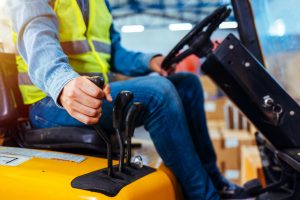
Safe attachment use depends on a strict pre-use checklist, correct attachment selection, operator competence and adherence to rated capacities; these controls prevent overload, instability and unauthorised modifications that create risk. Pre-shift checks should verify attachment mounting, locking pins, hydraulic connections and visible wear, while operators should confirm load charts for changed reach or rotated configurations. Certified training focused on safe stacking, load centres and signage ensures teams understand how attachments alter forklift behaviour and when to seek engineering advice. Embedding these practices into daily routines reduces incidents and preserves the productivity advantages attachments deliver.
-
Pre-Use Inspection: Verify mounting, pins and rated markings before every shift.
-
Load Verification: Confirm adjusted safe working load after adding extensions or jibs.
-
Operator Certification: Ensure operators are trained and authorised to fit and use attachments.
-
Maintenance Planning: Schedule vendor-supported servicing to extend accessory life.
-
Performance Monitoring: Track downtime and cycle times to verify ROI from accessories.
-
Continuous Improvement: Rotate attachments based on changing workflows and seasonal demands.
By following targeted strategies and safety best practices, warehouses and construction sites can convert heavy-duty forklift accessories into sustained efficiency gains while managing lifecycle costs and operator safety.
Frequently Asked Questions
What types of heavy-duty forklift accessories are available for specific tasks?
Heavy-duty forklift accessories come in various types tailored for specific tasks. Common categories include attachments like forklift extensions, drum handlers, spreader beams, and jibs, each designed to enhance the forklift’s capabilities. For instance, drum handlers are ideal for transporting barrels without manual handling, while spreader beams are used for lifting oversized loads. Additionally, safety accessories such as work platforms and safety cages are crucial for construction sites, ensuring operator safety while performing elevated tasks. Understanding the specific needs of your operation will help in selecting the right accessories.
How can I ensure the compatibility of attachments with my forklift?
To ensure compatibility of attachments with your forklift, it is essential to check the manufacturer’s specifications for both the forklift and the accessory. This includes verifying the forklift class, load capacity, and attachment type. Many manufacturers provide compatibility charts or guidelines that outline which attachments can be safely used with specific forklift models. Additionally, consulting with suppliers or technical experts can provide insights into the best combinations for your operational needs, ensuring safety and efficiency in material handling.
What maintenance practices should be followed for forklift accessories?
Regular maintenance of forklift accessories is crucial for ensuring safety and longevity. Key practices include conducting pre-use inspections to check for wear, secure fittings, and proper functionality. Scheduled maintenance should involve thorough checks of hydraulic systems, locking mechanisms, and attachment integrity. Keeping a maintenance log can help track usage and identify when parts need replacement. Additionally, following the manufacturer’s guidelines for servicing and using quality replacement parts will enhance the reliability of your accessories and reduce the risk of operational downtime.
What safety regulations apply to using forklift attachments on construction sites?
Using forklift attachments on construction sites is subject to various safety regulations, including compliance with local health and safety standards. Operators must be trained and certified to use specific attachments, and all equipment should be inspected regularly to ensure it meets safety requirements. Additionally, attachments must be used according to their rated capacities, and proper rigging practices should be followed to prevent accidents. It is also essential to have clear communication and safety protocols in place to protect all personnel on site during operations.
How do I choose the right tyres for my heavy-duty forklift?
Choosing the right tyres for your heavy-duty forklift involves considering the operating environment and the specific tasks the forklift will perform. Solid tyres are ideal for debris-heavy sites due to their puncture resistance, while pneumatic tyres offer better cushioning on uneven surfaces. Semi-pneumatic tyres provide a balance between durability and comfort. Additionally, consider the load capacity and the expected duty cycle when selecting tyres, as these factors will influence traction, stability, and overall operational efficiency. Consulting with tyre suppliers can also provide valuable insights tailored to your needs.
What are the benefits of using work platforms and safety cages with forklifts?
Work platforms and safety cages enhance safety and productivity by allowing operators to perform elevated tasks without the need for ladders or scaffolding. These attachments are designed with safety features such as gated access and fall-arrest anchor points, ensuring compliance with safety regulations. They enable quick access to high areas, reducing the time spent on tasks and improving workflow efficiency. Proper training and adherence to safety protocols are essential when using these attachments to prevent accidents and ensure a safe working environment for all personnel involved.