Different Forklift Tynes for Sale: What to Consider When Choosing the Right Forklift Tynes
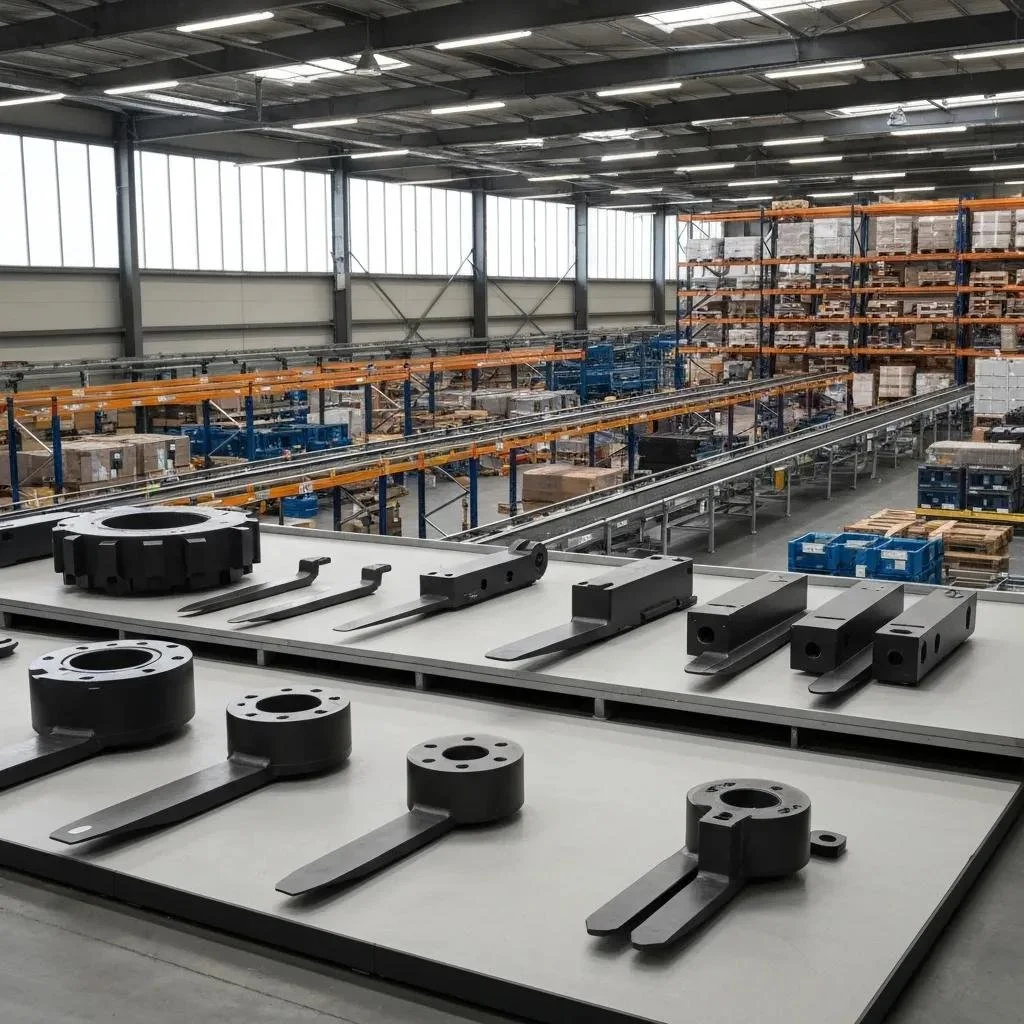
Forklift tynes are the load-bearing forks fitted to a lift truck; choosing the right type affects safety, operational efficiency and equipment compatibility. This guide explains types of forklift tynes for sale, how tynes function, what dimensions and mounting classes matter, and how material and maintenance decisions influence long-term performance. Many operators face uncertainty when matching tynes to specific loads, which can lead to premature wear or reduced lift capacity; this article provides actionable checks and practical examples to reduce that risk. You will learn tyne anatomy, common tyne varieties and their ideal applications, the key measurement and mounting checks to perform, and how to align material choices with operating environments and AS 2359 compliance. The following sections cover tyne components, a comparative table of types and uses, a step-by-step selection checklist, material comparisons with an EAV table, safety and compliance advice tied to Australian standards, and maintenance schedules for longer service life. Throughout, the content integrates industry terms like ITA/FEM mounting classes, load centre, wear limits and inspection protocols to help technicians and fleet managers make confident purchasing choices.
Mandarin Imports and Exports is a Sydney-based forklift parts supplier and warehouse solutions provider that offers a wide range of forklift attachments, including forklift tynes, and provides after-sales support to operators. This article is educational in intent but readers who want to see product options can consult Mandarin Imports and Exports' product catalogue or request specification support from the supplier. The remainder of the guide focuses on practical selection and safety guidance, with brief references to supplier capabilities where they help match buyers to the right tyne.
What Are Forklift Tynes and What Are Their Key Components?
A forklift tyne is the primary load-bearing attachment on a lift truck that transmits load forces to the carriage and mast; its design determines how weight is carried, concentrated and stabilised. The tyne functions by combining structural elements blade, shank, heel, tip and retention hooks so that load centre, thickness and contact area control lifting capacity and wear distribution. Correctly specified tyne geometry reduces stress concentrations and preserves the forklift's rated capacity, while unsuitable design increases tip wear and alters the effective load centre. Understanding tyne anatomy lets technicians interpret wear patterns and make informed replacements or upgrades that restore safe handling performance. The next subsections break down individual parts and explain how tynes operate in different material-handling contexts.
What Are the Main Parts of a Forklift Tyne?
The main parts of a fork tyne each play a specific structural or retention role and therefore influence inspection priorities and replacement criteria. The blade provides the flat bearing surface that supports pallet or unit loads and determines contact area; excessive blade wear reduces reserve capacity and increases slippage risk. The shank links the blade to the heel and transfers bending loads to the carriage; shank strength governs overall tyne stiffness and affects rated load capacity. The heel and tip are common wear points the heel where the tyne mates with the carriage and the tip where abrasion occurs and both should be measured against wear limits during inspections. Locking hooks and retention pins keep tynes secured to the carriage, and damaged or missing pins are immediate safety issues that require removal or repair before use.
How Do Forklift Tynes Function in Material Handling?
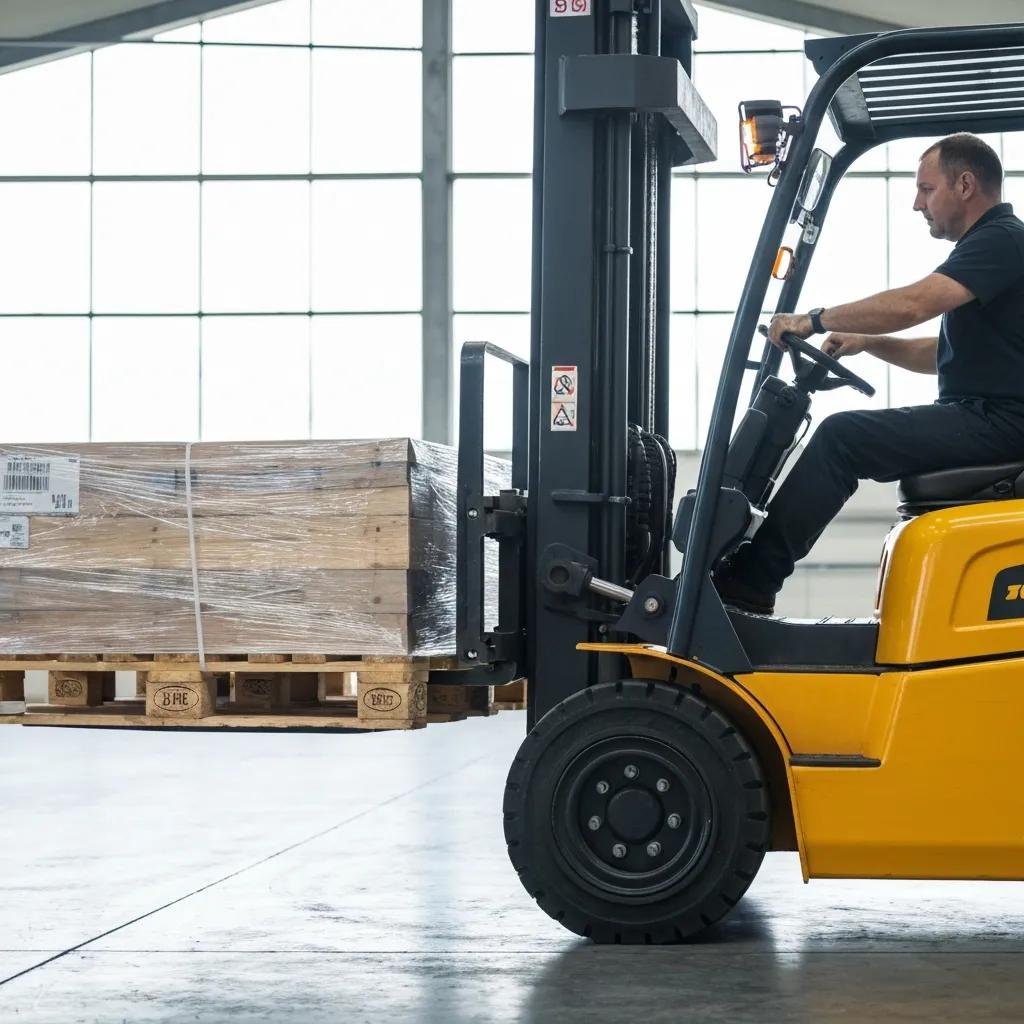
Tynes function by transmitting vertical and bending loads while maintaining a predictable load centre that the forklift's lifting chart assumes when calculating safe capacity. Load distribution across the blade determines how the lift truck perceives weight; concentrated or unbalanced loads move the effective load centre forward and can reduce the allowable lift capacity significantly. For palletised handling, broad blades distribute weight evenly and preserve stability, whereas irregular loads such as coils need shaped contact surfaces or cradles to avoid shifting and to keep the centre of gravity controlled. Operators must match tyne type and length to load geometry to prevent tipping and to ensure the forklift's rated capacity is not unknowingly exceeded, which leads directly into considerations for choosing the right tyne.
What Are the Different Types of Forklift Tynes and Their Applications?
There are several hyponyms within the tyne family standard, tapered, full-tapered, coil, drum, telescopic, stainless and heavy-duty tynes each engineered for specific load types and industries. Selecting among these types requires balancing contact area, insertion ease, corrosion resistance and bending strength, depending on whether you handle pallets, coils, drums or hygienic loads. Below is a concise EAV comparison to help you quickly match tyne types to applications and approximate load ranges for common uses.
| Tyne Type | Typical Use / Application | Key Feature / Best For |
|---|---|---|
| Standard forklift tynes | General pallet handling in warehousing | Broad blade for even load distribution; cost-effective |
| Tapered / full-tapered tynes | Precision insertion in racking and retail | Narrower tip eases entry between pallets or racking |
| Coil handling tynes | Curved or cradled profile to stabilise cylindrical loads | |
| Drum handling tynes / attachments | Chemical, oil and food drums | Specialized fittings or hooks to secure cylindrical drums |
| Stainless steel tynes | Food, pharma, washdown environments | Corrosion resistance and hygiene-friendly surfaces |
| Telescopic tynes | Reach and selective placement | Extendable sections for deep stacking and special tasks |
| Heavy-duty tynes | Construction, heavy manufacturing | Increased section modulus and thicker cross-sections |
What Professional Maintenance Tips Help Prevent Tyne Damage?
This EAV table highlights the primary operational match between tyne type and application so technicians can rule in or rule out types quickly. The next subsections compare standard vs tapered choices and describe how specialty tynes differ in structure and safety considerations.
What Are Standard and Tapered Forklift Tynes Used For?
Standard tynes are the workhorse for warehouses and logistics operations because their flat, rectangular blades give a wide bearing surface that spreads load forces and resists localised bending. Tapered and full-tapered tynes reduce tip width to allow easier penetration into pallets and narrow racking, making them preferable where insertion speed and precision are priorities. The trade-off is that tapered tips concentrate stress near the tip area and may wear faster under heavy, abrasive loads, which means tapered designs are best for lighter, more precise handling rather than brute-force lifting. When choosing between them, evaluate typical load profiles and insertion requirements if most tasks are pallet-to-rack placements with frequent horizontal insertion, tapered tynes can improve cycle times without sacrificing safety.
How Do Specialty Tynes Like Coil, Drum, and Stainless Steel Forklift Tynes Differ?
Specialty tynes are engineered to address geometry, hygiene and attachment needs that standard forks cannot safely meet; designs include curved profiles, hooks, cradle clamps and corrosion-resistant materials. Coil handling tynes use a curved shape to cradle rolled steel or textile coils and maintain contact over a wider arc, reducing localised pressure and the risk of load deformation. Drum tynes and dedicated drum attachments incorporate securing hooks or saddles to prevent rotation or sliding of cylindrical drums during lift and travel. Stainless steel tynes provide material-level corrosion resistance and smooth surfaces suitable for washdown environments in food and pharmaceutical operations, and they are often finished to reduce crevices where contaminants could accumulate.
How Do You Choose the Right Forklift Tynes? Key Factors to Consider
Choosing the right tyne is a decision framework that evaluates five core factors: load weight and shape, load centre, tyne dimensions (length, width, thickness), mounting class and material/environment. Each factor alters the effective capacity, handling characteristics and compliance obligations, so a short checklist helps operators confirm suitability before purchase.
Confirm rated load and typical load shapes: Match tyne strength and section to the maximum and routine loads.
Measure actual load centre: Ensure the chosen tyne length and the forklift's chart maintain safe capacity with the real load centre.
Verify mounting class and carriage compatibility: Check ITA/FEM mounting class and pin dimensions to avoid fitment issues.
Select material for environment: Choose stainless for washdown and high-strength steel for heavy industrial loads.
Allow safety margin and derating: Factor in added attachments, load rotation risk and wear when defining required capacity.
This checklist provides the structured sequence technicians should follow; next we cover capacity implications and how mounting classes and dimensions map to compatibility checks. When in doubt about mounting classes or fit, suppliers can confirm compatibility based on carriage drawings and ITA/FEM references.
How Does Load Capacity Influence Forklift Tyne Selection?
Load capacity selection begins with the forklift's rated capacity and the actual load centre; tyne rating must never be treated in isolation from the truck's rating and the change in load centre when using longer or specialised tynes. Increasing tyne length moves the load centre forward and reduces the truck's safe capacity by a calculable amount, so choosing thicker or higher-section tynes may be required to preserve reserve strength under that changed condition. Safety margins commonly applied by technicians include selecting tynes with a higher section modulus or a rated capacity above the maximum expected load and scheduling shorter inspection intervals for heavy-duty applications. Calculations mapping load centre shift to derated capacity are essential before installation to maintain compliance and operational safety.
What Tyne Dimensions and Mounting Classes Should You Know?
Key tyne dimensions technicians must record are length from heel to tip, blade width, blade thickness and spread between tynes, as these affect insertion capability and load distribution; accurate measurement prevents costly returns. Mounting classes often referenced as ITA/FEM classes describe the shank and hook interface and pin spacing; mismatching a mounting class can make a tyne physically incompatible or create unsafe load transfer paths. The EAV-style table below provides concise measurements and compatibility notes to use when matching a tyne to a carriage and mast.
This reference allows technicians to cross-check forklift data plates with proposed tyne specifications to avoid procurement errors. Always measure directly at the carriage and verify pin and hook geometry rather than relying on nominal forklift model specs alone.
What Materials Are Forklift Tynes Made From and How Do They Affect Performance?
Materials determine a tyne's resistance to bending, corrosion and wear; common choices include high-strength carbon steel, alloy steel and stainless steel, each suited to different operational priorities. Material selection influences maintenance cadence, repairability and long-term cost of ownership because softer surfaces may wear faster but can be repaired, while stainless resists corrosion but can be more expensive initially. The markdown table below summarises material attributes, benefits and recommended operating contexts to guide material selection for warehouses, outdoor construction zones and hygienic facilities.
| Material | Benefit | Operating Environment Suitability / Maintenance Notes |
|---|---|---|
| High-strength steel | High load-bearing capacity and cost-effective | Suited for general warehousing and heavy industrial use; requires corrosion protection if outdoors |
| Alloy steel (heat-treated) | Improved fatigue and abrasion resistance | Good for frequent heavy lifts and abrasive materials; inspect for cracks and heat-affected zones |
| Stainless steel (304/316) | Corrosion resistance and hygienic surface | Ideal for food, pharmaceutical and washdown environments; reduces contamination risk and cleaning costs |
| Specialised coatings / hardfacing | Surface wear resistance | Useful in abrasive or high-impact sites; recoating can extend service life but inspect base metal integrity |
This EAV-style comparison clarifies trade-offs so buyers can align material choice with site conditions and maintenance capacity. The next subsection compares steel versus stainless steel directly and suggests when to prioritise one over the other.
What Are the Benefits of Steel vs. Stainless Steel Forklift Tynes?
Steel tynes provide an economical combination of strength and toughness and are easily repaired by welding or hardfacing, making them a practical choice for heavy-duty and construction-focused fleets. Stainless steel tynes, in contrast, resist corrosion and are less prone to surface pitting in washdown applications, making them preferable where hygiene and chemical resistance are priorities. The trade-offs include higher upfront cost for stainless and different repair procedures stainless repair requires compatible welding consumables and practices to maintain corrosion resistance. Choose steel when maximum bending strength and repairability at lower cost matter; choose stainless when persistent moisture, food contact or chemical exposure would compromise carbon steel.
How Does Material Choice Impact Operating Environment Suitability?
Material selection maps directly to operational hazards: outdoor sites with salt exposure accelerate carbon-steel corrosion and favour stainless or coated steels, while food and pharmaceutical environments require materials that tolerate frequent washdown without harbouring contaminants. Abrasive loads and frequent impacts increase the need for hardened or alloy steels to limit plastic deformation and maintain service intervals. Maintenance regimes also vary stainless steel needs less corrosion treatment but still requires inspections for mechanical wear, whereas carbon steel demands protective coatings and more frequent anti-corrosion maintenance. Aligning material choice with both the immediate environment and the maintenance resources available reduces lifecycle costs and downtime.
How Can You Ensure Forklift Tyne Safety and Compliance?
Ensuring safety involves routine inspections, adherence to documented wear limits and alignment with regulatory expectations such as Australian Standard AS 2359 where applicable to safe lifting equipment. A practical inspection checklist reduces oversight risk and standardises when to retire or repair a tyne based on measurable criteria rather than visual judgement alone. Below is a bulleted inspection checklist that technicians can incorporate into daily and periodic maintenance routines.
Daily visual checks for deformations, cracks and missing retention pins to stop unsafe use immediately.
Monthly measurements of blade thickness and tip wear against manufacturer or AS 2359 wear limits to determine serviceability.
Verification of mounting hook integrity and carriage pin fit during scheduled maintenance intervals to prevent accidental detachment.
Record-keeping of inspections and any repairs to maintain traceability and support AS 2359 compliance or audits.
Following this checklist ensures that operators catch progressive wear before it becomes a safety hazard and preserves predictable load-bearing performance. The following subsection details specific wear limits and inspection protocols to apply in practice.
What Are the Wear Limits and Inspection Protocols for Forklift Tynes?
Common measurable wear limits include maximum allowable blade tip wear, heel deformation thresholds and allowable thinning of the blade cross-section; these metrics determine whether a tyne must be removed from service. Inspection protocols recommend daily quick checks for obvious damage, monthly dimensional checks with calibrated gauges, and an annual professional inspection that may include non-destructive testing for cracks or fatigue. Documentation of each inspection and any repairs is a critical control; traceable records support safe operation and expedite decisions about repair versus replacement. When wear approaches prescribed limits, replacement is usually safer than repair, especially if fatigue cracking near the shank or heel is suspected.
How Does Compliance with Australian Standard AS 2359 Affect Tyne Safety?
AS 2359 sets out requirements for selection, testing and in-service inspection of lifting equipment and influences procurement and maintenance expectations for forklift tynes used in regulated workplaces. Compliance means buyers should request evidence of design standards, material traceability and inspection records from suppliers and ensure installation and periodic inspections are recorded in accordance with the standard. From a practical standpoint, aligning specifications with AS 2359 reduces liability and ensures that both equipment and inspection protocols meet nationally recognised safety benchmarks. Operators should require documentation that tynes are fit for purpose and that inspection regimes are adequate to the operational risk profile.
What Are the Best Maintenance Practices to Extend Forklift Tyne Longevity?
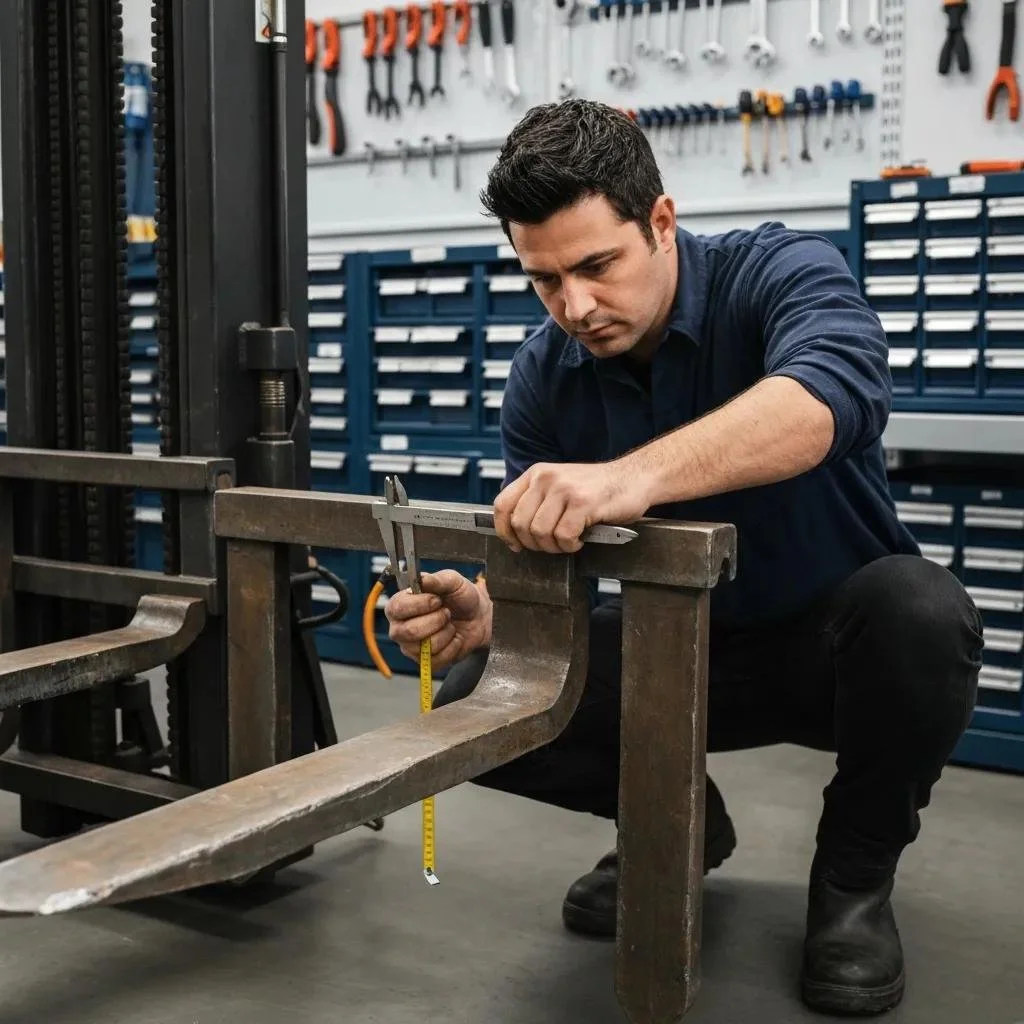
A structured maintenance programme combines daily operator checks with scheduled measurements and professional servicing to keep tynes in safe, serviceable condition and to extend useful life. Preventive practices include correct storage, avoiding side-loading abuse, operator training on proper placement and load handling, and scheduled dimensional monitoring to detect progressive wear. The list below organises recommended inspection cadences and main tasks to include at each frequency.
Daily: Quick visual inspection for cracks, bends and missing pins; check locking mechanism operation.
Monthly: Measure blade thickness, tip wear and hook engagement; lubricate retention points and record results.
Quarterly / Semi-annual: Functional checks under load and carriage geometry verification by maintenance staff.
Annual: Professional inspection, including possible non-destructive testing and review of service records.
Implementing this timetable reduces unexpected failures and supports predictable replacement planning, which in turn limits downtime and replacement costs. The next subsection discusses professional maintenance tips that prevent damage and downtime.
How Often Should Forklift Tynes Be Inspected and Maintained?
Daily operator checks should be brief but systematic, focusing on visible deformation, secure locking and tip condition before beginning a shift; these checks catch acute damage that makes immediate operation unsafe. Monthly inspections should include calibrated measurements of blade thickness, heel deformation and the condition of retention pins, with any metric approaching wear limits triggering action. Annual professional inspections provide deeper assessment, often using NDT techniques and a review of welding repairs or hardfacing history, and are the point at which a formal serviceability decision is documented. Consistent scheduling and accurate record-keeping ensure that inspection cadence matches operating intensity and that maintenance interventions occur before catastrophic failure.
Professional maintenance focuses on preventing common causes of tyne damage: side-loading, shock impacts, corrosion and improper welding repairs that change material properties. Training operators to avoid prying loads from the side, to set down loads gently, and to use appropriate attachments for irregular loads reduces cumulative stress and fatigue. Store spare tynes upright on appropriate racks and protect contact surfaces with coatings or protectors during downtime to limit corrosion and abrasion. As a final note, when professional repairs are necessary, use compatible consumables and documented welding procedures to preserve material performance and avoid introducing stress concentrators.
For bespoke advice or to discuss specific tyne models and mounting compatibility, Mandarin Imports and Exports can provide product details and after-sales support tailored to your carriage and operational needs. Their catalogue of forklift tynes and spare parts is available for review, and technicians can request spec-matching assistance to ensure correct selection and compliant installation.
Frequently Asked Questions
What factors should I consider when selecting forklift tynes for specific loads?
When selecting forklift tynes, consider the load weight and shape, the load centre, and the tyne dimensions such as length, width, and thickness. Additionally, ensure compatibility with the mounting class of your forklift. Each of these factors influences the effective capacity and handling characteristics of the forklift. For example, longer tynes may shift the load centre forward, potentially reducing the forklift's safe lifting capacity. Always match the tyne specifications to the operational requirements to ensure safety and efficiency.
How can I determine the right material for my forklift tynes?
The right material for forklift tynes depends on the operating environment and the types of loads being handled. High-strength steel is cost-effective for general use, while stainless steel is ideal for hygienic applications, such as food and pharmaceuticals, due to its corrosion resistance. Alloy steel offers improved fatigue resistance for heavy-duty applications. Consider the specific conditions, such as exposure to moisture or abrasive materials, to select a material that balances durability and cost-effectiveness.
What are the common signs of wear that indicate forklift tynes need replacement?
Common signs of wear that indicate forklift tynes may need replacement include excessive blade tip wear, deformation at the heel, and thinning of the blade cross-section. Regular inspections should measure these parameters against manufacturer specifications or industry standards. If any wear approaches the prescribed limits, it is generally safer to replace the tynes rather than risk operational safety. Additionally, visible cracks or missing retention pins should prompt immediate removal from service.
How do I ensure compliance with safety standards for forklift tynes?
To ensure compliance with safety standards, such as Australian Standard AS 2359, maintain thorough documentation of inspections, repairs, and maintenance schedules. Regularly verify that tynes meet design and material specifications, and ensure that installation and periodic inspections are recorded. Training operators on safety protocols and conducting routine checks for wear and damage will also help maintain compliance and reduce liability. Always source tynes from reputable suppliers who can provide evidence of compliance with relevant standards.
What maintenance practices can extend the life of forklift tynes?
To extend the life of forklift tynes, implement a structured maintenance programme that includes daily visual inspections, monthly measurements of wear, and annual professional assessments. Avoid side-loading and ensure proper load handling techniques are followed by operators. Store tynes correctly to prevent corrosion and damage, and lubricate retention points regularly. Keeping accurate records of inspections and maintenance activities will help identify trends in wear and inform timely replacements, ultimately reducing downtime and costs.
What should I do if I notice damage to my forklift tynes?
If you notice damage to your forklift tynes, such as cracks, excessive wear, or missing retention pins, remove them from service immediately to prevent unsafe operation. Conduct a thorough inspection to assess the extent of the damage and determine whether repair or replacement is necessary. Consult with a qualified technician for professional advice on repairs, and ensure that any replacements meet the required specifications for your forklift model and operational needs.